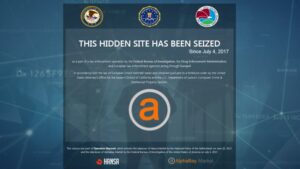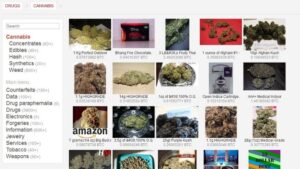
When Green’s diligent forum-moderating turned into a job offer from DPR, he was thrilled. DPR sent a job description, which included customer service and resetting passwords. Green (taking on a new admin handle, Flush) worked 80 hours a week, mediating drug sale disputes from his lounger, Fox News running in the background.
Ross Ulbricht Didn’t Create Dread Pirate Roberts This Guy Did
As the government slowly tightened the noose on Ulbricht, the series of mistakes he made all along the way started to catch up with him. One of the earliest (and biggest) mistakes he made was leaving a trail of digital breadcrumbs that could be traced back to him. Posing as Cirrus, he received assignments directly from Ulbricht. The drugs arrived by mail with fake return addresses, slipped inside CD and DVD cases, or little ripples of cardboard.
Who Is Ross Ulbricht, Founder Of Drug Marketplace Silk Road, Now Pardoned By Trump?
The Bitcoin core website posts the latest updates to the open-source Bitcoin software, which is programmed to decide which blockchains contain valid transactions. The users of Bitcoin Core only accept transactions for that blockchain. Making it the bitcoin blockchain that everyone else wants to use. Dread is a great alternative if you fancy checking out another dark-web-based social network or forum with news and discussions. Some might recall from that same time period the popular blog Jynxies Natural Habitat, which cataloged different New York City heroin bags, or “stamps,” accompanied by product reviews that readers could weigh in on as well.

Lisa Cook, The Fed Governor Donald Trump Is Trying To Fire
- AVG Secure VPN protects your online connection with bank-grade encryption and hides your identity behind a virtual IP address.
- Silk Road was used by thousands of drug dealers, distributing hundreds of kilograms of illegal drugs to more than 100,000 buyers, totaling more than $200m (£131m).
- Ulbricht’s attorney Joshua Dratel stated that he and his client “obviously, and as strongly as possible, condemn” the anonymous postings against the judge.
- One day he made a large, flat blue crystal, affixed it to a ring, and gave it to Julia.
- Silk Road was the name of a platform used on the dark web to sell illegal goods, providing anonymity for those who required it for their activities.
It operated on the hidden corners of the internet, outside of traditional search engines, and accessible only through encrypted software like Tor. Using the online moniker “Dread Pirate Roberts,” or “DPR,” ULBRICHT controlled and oversaw every aspect of Silk Road, and managed a staff of paid, online administrators and computer programmers who assisted with the day-to-day operation of the site. Through his ownership and operation of Silk Road, ULBRICHT reaped commissions worth over $13 million generated from the illicit sales conducted through the site. ULBRICHT also demonstrated a willingness to use violence to protect his criminal enterprise and the anonymity of its users. ULBRICHT even solicited six murders-for-hire in connection with operating the site, although there is no evidence that these murders were actually carried out. The vast majority of items for sale on Silk Road were illegal drugs, which were openly advertised as such on the site.
In that relatively short span, Silk Road managed to rack up (depending on how you count) more than $1 billion in sales. ULBRICHT deliberately operated Silk Road as an online criminal marketplace intended to enable its users to buy and sell drugs and other illegal goods and services anonymously and outside the reach of law enforcement. ULBRICHT sought to anonymize transactions on Silk Road in two principal ways. In 2015, Ulbricht was sentenced to life in prison by a federal judge for drug trafficking, computer hacking and money laundering as part of the Silk Road operations. Nearly ten years ago, the sprawling dark-web drug market known as the Silk Road was torn offline in a law enforcement operation coordinated by the FBI, whose agents arrested the black market’s boss, Ross Ulbricht, in a San Francisco library. It would take two years for Ulbricht’s second-in-command—an elusive figure known as Variety Jones—to be tracked down and arrested in Thailand.
How Did Investigators Catch The Dread Pirate Roberts (DPR) In San Francisco?
The BBC reported that in the two and a half years it was operational, users sold more than $200 million in drugs through the site, which also offered fake IDs and hacking tools. “It’s kinda earned the reputation as the eBay of drugs,” cybersecurity researcher Brian Krebs reportedly told NPR in 2013, following Ulbricht’s arrest. The original Silk Road is no longer active, but it paved the way for many successor dark web marketplaces that continue to operate today, albeit with similar risks of scams and legal consequences. Now, after being sentenced to life in prison and spending more than a decade behind bars, Ulbricht will walk free, thanks to Donald Trump—and to the president’s ever-closer ties to the American cryptocurrency world.
What Are The Risks Of Visiting Marketplaces On The Dark Web?
Soon, Silk Road attracted buyers and sellers from around the world to his illegal drug marketplace. The final nail in the coffin was when Ulbricht used the same online account to talk about the Silk Road website and to post a job listing with his email address. That oversight exposed him, and a tax agent identified him in 2011, which led to the seizure of his laptop and Silk Road crypto as well as his eventual arrest and subsequent life sentence. He envisioned the site as a “means to abolish the use of coercion and aggression amongst mankind,” according to his LinkedIn page. At its core, the Silk Road operated much like any other e-commerce site, but with a few key differences.
Ross Ulbricht, also known as “Dread Pirate Roberts,” operated the anonymous digital marketplace known as Silk Road between 2011 and 2013, when law enforcement shut the site down and arrested him at a California public library. Bitcoin offered Silk Road users an added layer of anonymity, as transactions could be conducted without revealing personal information or linking to traditional financial institutions. This allowed buyers and sellers on the platform to trade illicit goods and services with a lower risk of being traced by law enforcement. Law enforcement agencies worldwide have continued their efforts to combat dark web marketplaces, with several successful operations leading to the closure of major platforms.
Interpol Bags 1,209 Suspects, $97M In Cybercrime Operation Focused On Africa
The feedback received was then used by the site to weed out fraudulent sellers, while reputable sellers had their products highly sought after. After the original Silk Road collapsed, Silk Road 2.0 quickly rose to take its spot. However, its time on the dark web was even shorter — ending just one year after its launch. However, they are incredibly volatile and are often subject to cyberattacks and law enforcement raids. The Silk Road was swiftly shut down, but its demise led to new dark web marketplaces, fostering a hotbed of illicit trading, identity theft, and account hacking. Read on to learn about the Silk Road, its successors, and how LifeLock Standard can help you find out if your information is on the dark web.
- It was a clever touch, borrowing the name from The Princess Bride, in which the pirate was a mythical character, inhabited by the wearer of the mask.
- The story of Silk Road is a cautionary tale about the intersection of technology, anonymity, and illegal activities.
- That attracted the attention of politicians like US Senator Chuck Schumer, and federal agents were put on the case.
- He had a master’s degree in materials engineering, specializing in crystallography.
- With Ulbricht logged on to his computer at a table in the science fiction section, two agents pretended to have a loud domestic spat behind him.
He took an interest in Tor, the encryption software that allowed users to visit sites such as Silk Road. Tor’s protocol is a kind of digital invisibility cloak, hiding users and the sites they visit. Tor stands for “the Onion Router” and was launched by the Navy in 2002. It has since become a tool for all manner of clandestine communications, licit and illicit, from circumventing censorship in countries like China to powering contraband sites like Silk Road. Tor’s encryption is so layered, agents thought it was unbreakable.
Silk Road operated via a hidden darknet feature in the anonymous Tor network. Accessed with an app, the Tor network allowed users to anonymously browse Silk Road without the threat of traffic monitoring. All transactions were conducted in cryptocurrency — namely Bitcoin — which further ensured anonymity. The digital era has brought many technological innovations and created lifestyles that were unthinkable at the turn of the century. The list of digital technology inventions goes on and ventures into every sector of the world’s economy.
Silk Road’s Operations
As the narrative unfolds, viewers learn about the intense efforts of multiple law enforcement agencies to shut down the Silk Road and apprehend its creator. It showcases the largest online manhunt in history, involving Homeland Security, the DEA, the FBI, and even the Secret Service. Interestingly, it was a young tax inspector from the IRS, Gary Alford, who ultimately cracked the case and unmasked the elusive “Dread Pirate Roberts”. In late 2020, national media reported that former President Donald Trump was considering commuting Mr. Ulbricht’s sentence, but he did not at that time. Since Ulbricht’s incarceration, more than 570,000 have signed an online petition created by Lyn Ulbricht, Ross’ mother, to commute his double life sentence. The Silk Road dark web remains a controversial subject in discussions about online privacy, legality, and ethics in the digital age.
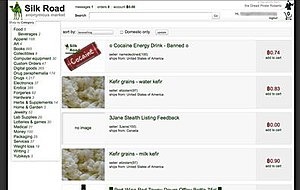
The Silk Road’s rise and fall highlight the potential and risks of anonymous online marketplaces. While it demonstrated the demand for decentralized commerce, it also exposed vulnerabilities to hacking, scams, and legal crackdowns. The marketplace derived its name from the historical trade network linking Asia, the Middle East, Africa, and Europe. Despite its eventual shutdown, Silk Road remains a landmark in the history of cyber black markets. In this article, we’ll explore the history of the Silk Road, its impact on the internet and cybercrime, and the legacy it left behind as the online marketplace that reshaped the digital black market landscape.
It was heavy, had no return address, and bore a postmark from Maryland. Join me each week, where I’ll break down complex topics and dissect the latest news within the cybersecurity industry and blockchain ecosystem, simplifying the tech world. Some estimates suggest that Silk Road generated up to $1.2 billion in sales and $80 million in commissions, though more conservative estimates are $183 million in sales and $13 million in commissions. Worth approximately $1 billion at the time, it was later revealed that the US Government made these transfers in a civil forfeiture action. According to a press release, the Bitcoin wallet belonged to “Individual X” who had stolen the Bitcoin by hacking into Silk Road.