While some and some users may experience improvements in cognitive function, others may not experience any noticeable effects. Another potential benefit of PEA is its ability to enhance cognitive function. Some users claim that it can improve focus, attention, and memory, and even promote creativity and productivity. Furthermore, while PEA may have potential benefits for weight loss, it’s important to remember that everyone’s body is different. It’s important to listen to your body and make adjustments to your diet and exercise routine as needed to achieve your weight loss goals. Additionally, PEA has been found to have a role in regulating appetite and weight loss.
More On Vitamins & Supplements
Never delay or disregard seeking professional medical advice from your doctor or another qualified healthcare provider because of something you have read on SelfHacked. We understand that reading individual, real-life experiences can be a helpful resource, but it is never a substitute for professional medical advice, diagnosis, or treatment from a qualified healthcare provider. The opinions expressed in this section are solely those of the users who may or may not have medical or scientific training. SelfHacked does not endorse any specific product, service, or treatment.
The Many Health Benefits Of Phenylethylamine (PEA) – Your Brain’s Natural Stimulant
Previous studies demonstrated that βPEA is synthetized in neurons that also contain tyrosine hydroxylase and coexists with dopamine (DA) in the nigrostriatal brain regions (Juorio et al. 1991). In striatal tissue, βPEA synthesis occurs with a rate similar to that of DA, but since it is more efficiently metabolized by monoamine oxidase enzymes, striatal βPEA concentrations are about three orders of magnitude lower than DA levels (Paterson et al. 1990). These data suggest that it is crucial the DA neurons keep low concentrations of βPEA to guarantee a proper physiological activity. In fact, changes in urinary βPEA levels have been documented in various human disorders including schizophrenia, attention deficit hyperactive disorder (ADHD) and depression (Baker et al. 1991, O’Reilly and Davis 1994, Sandler et al. 1980). Moreover, in vivo studies showed that physiological βPEA concentrations directly and transiently inhibit the firing rate of the DA neurons through the activation of the DA D2 autoreceptors (Ishida et al. 2005, Mercuri et al. 1997, Rodriguez and Barroso 1995). Interestingly, the firing inhibition caused by βPEA as well as βPEA-induced behaviors (Barroso and Rodriguez 1996) were not affected by pretreatment with the vesicular monoamine transporter (VMAT) blocker reserpine.
- Entirely different phenethylamines are approved as prescription medications, used to treat ADHD and depression.
- This led to a widely-touted suggestion that people could increase their brain levels of PEA by eating chocolate, and that this could be linked with falling in love (even nowadays, especially around February 14th).
- Proper supplementation with PEA is designed to provide rapid improvements on mental clarity, mood, stamina, energy, libido, joy and motivation.
- In her spare time, Klinger explores food and culture all over the world with her family, realizing the power a healthy lifestyle has to keep people together.
- However, it wasn’t until the mid-20th century that researchers began to unravel its significance in human physiology.
Acetylcholine In AP Psychology: Understanding Neurotransmitters And Their Role In…
The study suggests that PEA could be a better treatment for depression as compared to SSRIs. Selective serotonin Reuptake inhibitors (SSRI) are the most commonly prescribed antidepressants worldwide. SSRIs are effective by blocking the serotonin transporter , and thereby preventing the process of reuptake of serotonin.
Phenylethylamine (PEA) suggested dosage for cognitive benefit is 500 mg up to 3-times per day. In fact, some suggest that a PEA deficit may be the cause of depression in the first place. One study had 14 patients with major depression take up to 60 mg per day of Phenylethylamine (PEA) along with 10 mg of selegiline (L-Deprenyl) for up to 50 weeks. In this review we investigate how phenylethylamine (PEA) works in the human brain. Phenylethylamines are a group of phenethylamine derivatives which contain PEA as a backbone. Due to the paucity of studies on PEA, it is difficult to determine the ideal dosage.
Word Of The Day
Taking phenethylamine along with tramadol (Ultram) might cause too much serotonin in the brain and might result in side effects including confusion, shivering, stiff muscles, and others. Taking phenethylamine along with pentazocine (Talwin) might increase serotonin too much. This might cause serious side effects including heart problems, shivering, and anxiety.
Figure 6
Glaucoma is a leading cause of blindness, and this has been related to increased intraocular pressure (IOP). Reduction of IOP is an effective treatment for glaucoma but some patients are refractory to current therapies. Investigators at Alcon Research identified 5-HT2A receptors in ocular tissue and demonstrated that topical administration of R(-)DOI, a potent 5-HT2 receptor agonist identified by us, produced a significant decrease in IOP in cynomolgus monkeys. In a collaborative effort with Alcon, our research goal was to identify a novel 5-HT2 serotonin receptor agonist with reduced lipophilicity so that it would not readily penetrate the BBB to produce untoward (i.e., hallucinogenic) side effects. We selected a high-affinity/high-efficacy 5-HT2 serotonin receptor agonist (i.e., DOB) and attempted to reduce its lipophilicity. Although our results were never published, they provided the first supporting evidence that several examples of classical hallucinogens, including DOM, displayed greater affinity for the latter than the former.
8 Tissue Collection For DA ELISA And Western Blotting
Although PMA and MMA substituted in (+)amphetamine-trained animals, 3.4-DMA curiously failed to do so. But, 3,4-DMA substituted in MDA-trained animals.49 The optical isomers of 3,4-DMA substituted both in MDMA- and PMMA-trained animals with relatively little difference in potency (Table 3). This suggested that the 4-position oxygen atom is more important for PMMA-like action whereas the 3-position oxygen atom favors MDMA-like actions.
- PEA may have certain adverse consequences, especially when taken in high dosages.
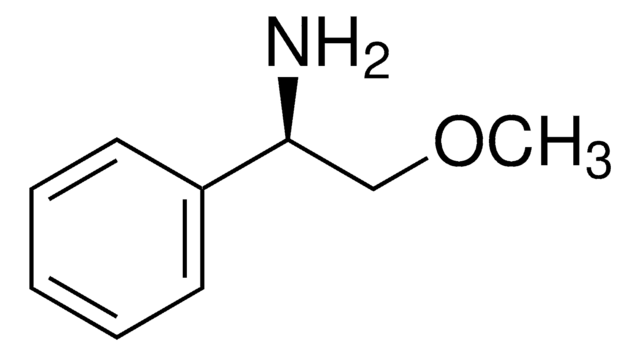
- Phenylethylamines are a group of phenethylamine derivatives which contain PEA as a backbone.
- Elegans VMAT homologue CAT-1 (cat-1(ok411) were obtained from the Caenorhabditis Genetic Center (University of Minnesota, Minneapolis, MN).
- Interestingly, PEA has also been studied for its potential effects on appetite and weight management.
- Once in the brain, PEA interacts with various neurotransmitter systems, particularly those involving monoamines like dopamine, norepinephrine, and serotonin.
- That is why they frequently fail to work, cause troublesome side effects, or both.
Finally, using acid hydrolysis the metal alcoholate is decomposed and the product can be isolated and extracted from the ether. People taking MAO inhibitors, which are used for treating depression, anxiety, and other neurological illnesses like Parkinson’s, or those that have a condition known as phenylketonuria (PKU) should not take phenethylamine. There is no clinical evidence to support the efficacy of these supplements whatsoever. Research suggests that phenethylamine passes easily through the blood-brain barrier (BBB). Studies in dogs suggest that phenethylamine had a very short half-life (5 to 10 minutes) 54.
During the heart-pounding excitement of new love, your brain releases lots of phenylethylamine (PEA). PEA functions like a natural amphetamine, so you really are high on love. Some research suggests that it could help protect brain cells from damage and may even promote the growth of new neurons.
If all this talk about PEA has you wondering how to get more of it in your life, you’re in luck! There are both natural food sources and synthetic supplements available. It was first synthesized in 1894 by Romanian chemist Lazăr Edeleanu, but its presence in the human brain wasn’t confirmed until the 1960s. Since then, it’s been a subject of fascination for neuroscientists, psychologists, and even chocolate lovers (more on that later!). Following some additional SAR studies on cathinone analogs, relatively little was published on these agents for over a decade.
Because there is such a dearth of knowledge about Phenylethylamine’s supplement effects and interaction, I’d advise against trying it out with a bunch of other compounds. At higher doses, it offers a more intense pleasurable sensation, along with the supposed cognitive effects. As mentioned, this is an endogenous amine that affects neurotransmitter activity in the brain.